-
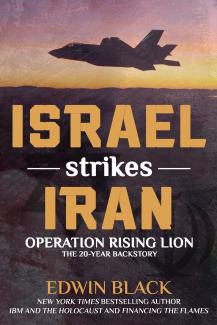
Edwin Black
Israel Strikes Iran covers the period between Edwin Black’s first reports, in 2008, on Iran’s progress towards nuclear weapons capability and Israel’s decisive strike in June 2025.
-

Rachel Ehrenfeld
This reissue of Narco-terrorism lays out how governments and non-state actors around the world have initiated, developed, and in some cases virtually dominated the drug business to finance terrorist activities. Ehrenfeld argues that unless we recognise the geopolitical aspects of the situation, the drug problem will be fought on the wrong fronts in the wrong way and with little chance of victory.
-
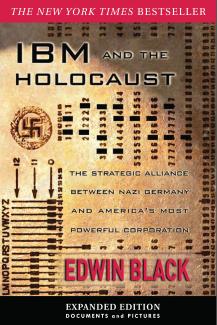
Edwin Black
The award-winning, bestselling shocker detailing IBM's conscious cooperation with the Nazis in all six steps of the Holocaust, from identification to extermination.
-
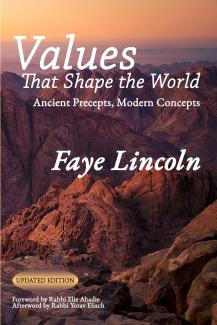
Faye Lincoln
Cultural ethicist Faye Lincoln's first book of insight is Values that Shape the World: Ancient Precepts, Modern Concepts. In her work, Lincoln dissects and intersects millennia of history in the context of the Judeo-Christian principles that have driven and continue to drive the evolution and revolution of today’s highly-volatile world.
-
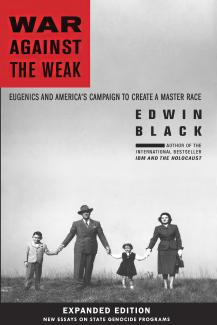
Edwin Black
The gripping chronicle documenting how American corporate philanthropies launched a national campaign of ethnic cleansing in the United States, helped found and fund the Nazi eugenics of Hitler and Mengele — and then created the modern movement of "human genetics." Some 60,000 Americans were sterilized under laws in 27 states. This expanded edition includes two new essays on state eugenicide programs, in Connecticut and North Carolina.
-
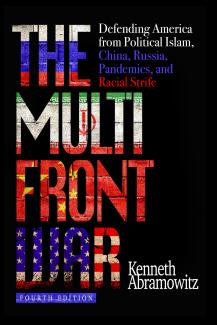
Kenneth Abramowitz
America is fighting a major international war, says the author. Yet, the country does not really know it. Moreover, the war is being waged on a multitude of distinct fronts—both internal and external. The United States is wholly unprepared to fight a unified battle.
-
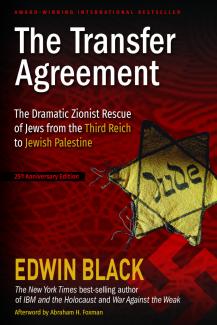
Edwin Black
The Transfer Agreement is Edwin Black's compelling, award-winning story of a negotiated rescue in 1933 between Zionist organizations and the Nazis to transfer some 50,000 Jews, and $100 million of their assets to Jewish Palestine. In the process, the arrangement stopped the worldwide Jewish-led boycott launched against the Hitler regime.
-

Yotav Eliach
The 4,000–year religious, ideological, and historical story of the Jewish nation is brought into stunning clarity by a leading authority on the subject. This book has transformed the conversation on the subject of modern Israel and its inseparable connection to the Jewish people.
-
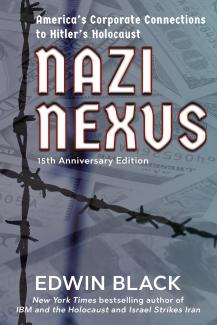
Edwin Black
Nazi Nexus is the long-awaited wrap-up in a single explosive volume that details pivotal American corporate connections to the Holocaust. The biggest names and crimes are all there. IBM and its facilitation of the identification and accelerated destruction of the Jews; General Motors and its rapid motorization of the German military enabling the conquest of Europe and the capture of Jews everywhere.
-
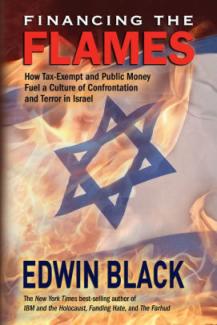
Edwin Black
Uncovers the robust use of US tax-exempt, tax-subsidized, and public monies to foment agitation, systematically destabilize the IDF, and finance terrorists in Israel. Black documents that it is actually the highly politicized human rights organizations and NGOs themselves which are financing the flames that make peace in Israel difficult if not impossible.
-

Elizabeth Black
A tale of loss, longing for home, and the connections that bind two peoples to a single land—and to one another.
-
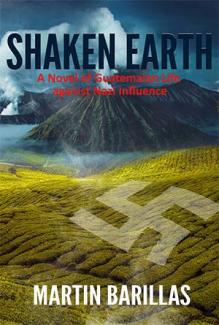
Martin Barillas
Shaken Earth is the first novel by Martin Barillas, inspired by his love for his family’s native Guatemala. Set in the turbulent early 1930s, this small country is the scene for an epic tale where seemingly small decisions lead to explosive consequences that will affect everyone’s lives forever.
-
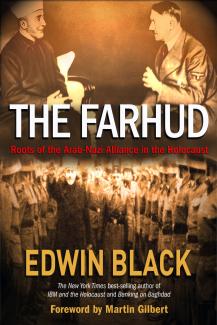
Edwin Black
The Nazis needed oil. The Arabs wanted the Jews and British out of Iraq. The Mufti of Jerusalem forged a far-ranging alliance with Hitler resulting in the June 1941 Farhud, a Nazi-style pogrom in Baghdad that set the stage for the devastation and expulsion of the Iraqi Jews and ultimately almost a million Jews across the Arab world. The Farhud was the beginning of what became a broad Nazi-Arab alliance in the Holocaust.
-

Marc J Rauch
A brash and audacious debunking of the myths and manipulation that brought the world to oil addiction.
-
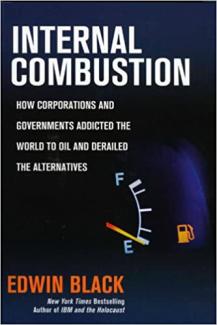
Edwin Black
Edwin Black has mined scores of corporate and governmental archives to assemble thousands of previously uncovered and long-forgotten documents and studies into this dramatic story. He traces a continuum of rapacious energy cartels and special interests dating back nearly 5,000 years, from wood to coal to oil, and then to the bicycle and electric battery cartels of the 1890s, which created thousands of electric vehicles that plied American streets a century ago. But those noiseless and clean cars were scuttled by petroleum interests ...
-

Rachel Ehrenfeld
Lays out how governments and non-state actors around the world have initiated, developed, and in some cases virtually dominated the drug business to finance terrorist activities. Ehrenfeld argues that unless we recognise the geopolitical aspects of the situation, the drug problem will be fought on the wrong fronts in the wrong way and with little chance of victory.
-

Edwin Black
Edwin Black's controversial and bitter-pill crisis plan to rescue America once the oil stops.
-
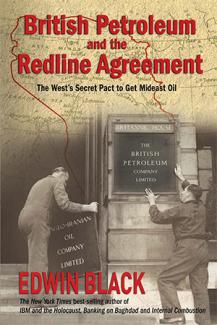
Edwin Black
How did the West get Middle East Oil? The tense chronicle of the international deceit and strong-arm tactics of men, oil companies and government is laid out in a revealing minute-to-minute drama. Massive research supports this unforgettable revelation by a master of corporate investigation author Edwin Black.
-
Edwin Black
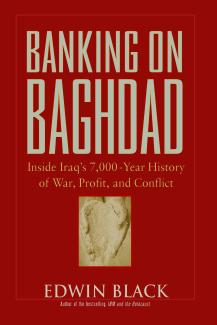
Banking on Baghdad chronicles the dramatic and tragic history of a land long the center of world commerce and conflict. Tracing the involvement of Western governments and militaries, as well as oil, banking, and other corporate interests, Black pinpoints why today, just as throughout modern history, the world needs Iraq's resources—and remains determined to acquire and protect them. Banking on Baghdad almost painfully documents the many ways Iraq's recent history mirrors its tumultuous past.
-
Edwin Black
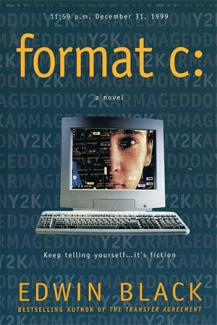
Two Millennial fears haunted most Americans at the turn of the last century: the sense of Armageddon, and the pending Y2K crisis. Both are woven together in this tense and compelling mystic techno-thriller about the final battle between good and evil fought against the race to fix the Millennium Bug.
-
Edwin Black
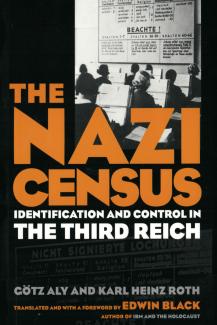
The Nazi Census documents the origins of the census in modern Germany, along with the parallel development of IBM machines that helped first collect data on Germans, then specifically on Jews and other minorities. Götz Aly and Karl Heinz Roth begin by examining the history of statistical technology in Germany, from the Hollerith machine in the 1890s through the development and licensing of IBM punch-card technology.